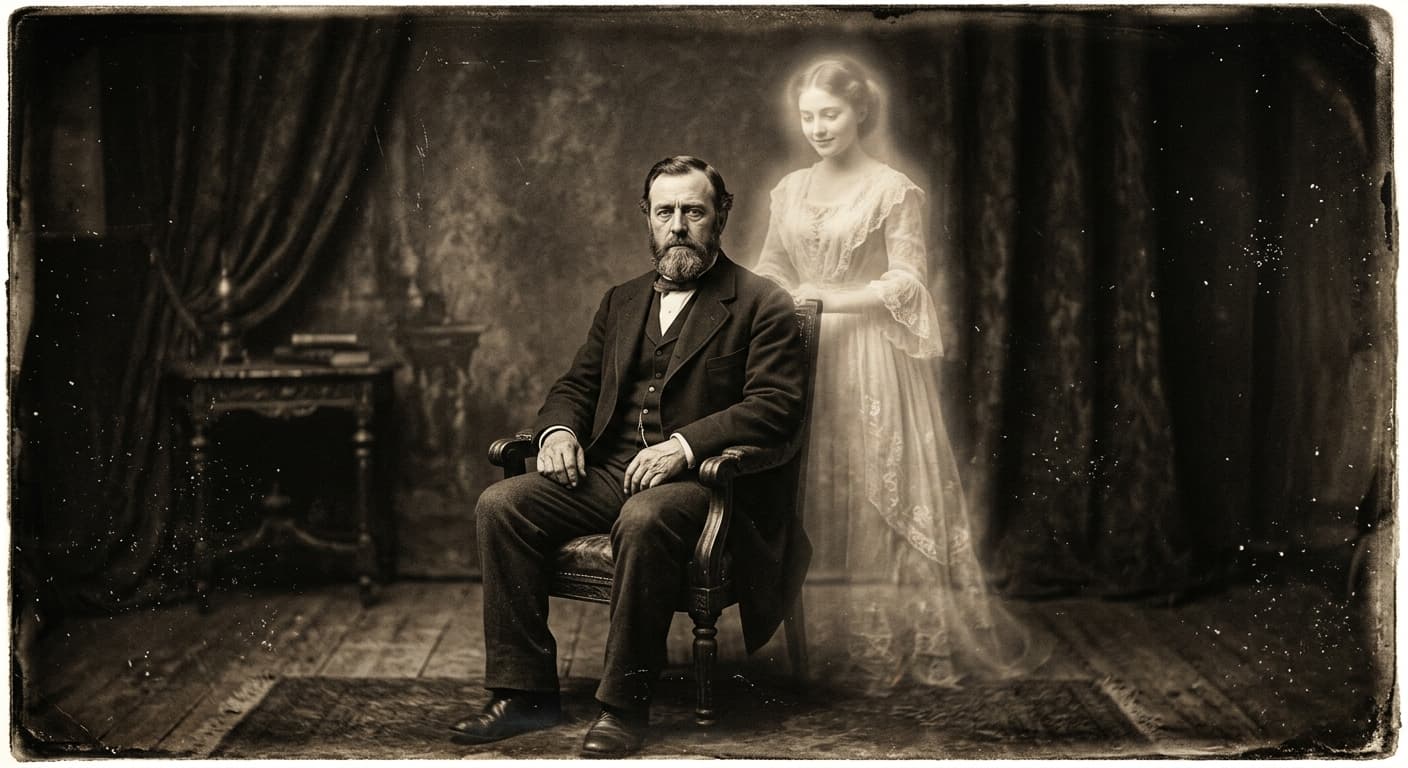
Shadows in the Silver: William H. Mumler and the Bizarre Rise of Spirit Photography
The mid-19th century was an era defined by a profound intimacy with death. Ravaged by diseases like tuberculosis and cholera, and shattered by the unprecedented carnage of the American Civil War, grieving families were desperate for any connection to the loved ones they had lost. At the very same time, the burgeoning technology of photography was capturing the public’s imagination. It was an age where science and the supernatural frequently collided, creating the perfect fertile ground for one of the most audacious and fascinating figures of the Victorian era: William H. Mumler, the world’s first "spirit photographer."
Before he became a controversial sensation, Mumler was a humble jewelry engraver and an amateur photographer living in Boston. In 1861, while testing out a friend’s photographic equipment, Mumler took a self-portrait. When he developed the glass plate, he was stunned to see a second figure in the frame—a faint, translucent apparition of a young girl sitting beside him. Mumler initially dismissed the ghostly interloper as a simple mistake, assuming he had accidentally reused a glass plate that hadn't been properly cleaned, resulting in a double exposure. But when he showed the image to a spiritualist friend, the narrative quickly shifted. The friend declared the image a miraculous breakthrough: the ethereal figure was identified as Mumler’s deceased cousin.
Word of the "spirit photograph" spread like wildfire through the burgeoning Spiritualist community. Spiritualism, a religious movement based on the belief that the living could communicate with the dead, was reaching its peak in America. Suddenly, Mumler found himself besieged by grieving widows, mourning parents, and curious onlookers, all willing to pay exorbitant sums for a chance to sit for a portrait with their departed relatives. Recognizing a lucrative opportunity, Mumler abandoned his engraving tools, hung out his shingle as a full-time spirit photographer, and began charging up to ten dollars a picture—a small fortune at the time.
By the late 1860s, Mumler had relocated his booming enterprise to New York City. His studio became a pilgrimage site for those desperate for closure. His process was remarkably consistent: a client would sit for a portrait in a dimly lit room, and upon development, a faint, ghostly apparition would invariably appear hovering behind or beside them. The spirits were sometimes recognized as fallen soldiers, deceased children, or beloved spouses. To the grieving, these photographs were irrefutable proof of the afterlife and a profound source of comfort.
However, the meteoric rise of Mumler’s enterprise inevitably attracted skeptics. Photographers began pointing out the telltale signs of manipulation. Some noticed that the "ghosts" in Mumler’s photos bore a striking resemblance to living people in Boston and New York, occasionally even recognizing individuals who had recently sat for normal portraits in Mumler's studio. In 1869, the authorities finally intervened. Following a sting operation orchestrated by the mayor of New York, Mumler was arrested and charged with fraud and larceny.
The ensuing trial became a media spectacle, pitting true believers against fierce rationalists. The prosecution’s star witness was none other than the legendary showman P.T. Barnum. Ironically, the man famous for his own elaborate hoaxes was determined to expose Mumler as a charlatan preying on the vulnerable. Barnum even commissioned a photographer to create a fake spirit photograph of Barnum alongside the "ghost" of Abraham Lincoln to demonstrate to the jury exactly how double exposure and combined negatives could deceive the eye. Prominent photographers testified that there were numerous ways to achieve the ghostly effects using darkroom trickery.
Despite the damning testimony and the glaring evidence of photographic manipulation, the trial took an unexpected turn. The prosecution struggled to definitively prove that Mumler had actively fabricated the specific photographs submitted as evidence. Because the darkroom process was complex and poorly understood by the general public, the jury was left with a shadow of a doubt. Mumler was ultimately acquitted, much to the dismay of his detractors.
Yet, the trial permanently tarnished Mumler’s reputation. Although he was a free man, his credibility was in ruins, and his business suffered. But Mumler had one final, iconic act left in his career. In 1872, a woman hiding her face in mourning veils entered his studio under an assumed name. It was Mary Todd Lincoln, the widow of the assassinated President. The resulting photograph—showing Mary seated with the loving, translucent hands of Abraham Lincoln resting gently on her shoulders—became one of the most famous and widely circulated images of the 19th century. Whether a calculated manipulation or a profound coincidence, it gave the former First Lady a desperate measure of peace.
Ultimately, William H. Mumler died in relative obscurity and poverty in 1884, having returned to his previous life as an engraver. Today, his spirit photographs stand not as scientific evidence of the afterlife, but as hauntingly beautiful testaments to the human capacity for grief and the eternal desire to keep our lost loved ones close. Mumler may have been a pioneering fraudster, but in his darkroom, he manufactured the one thing his clients needed most: hope.