The Plot to Steal a President: The Bizarre 1876 Grave Robbery That Almost Succeeded
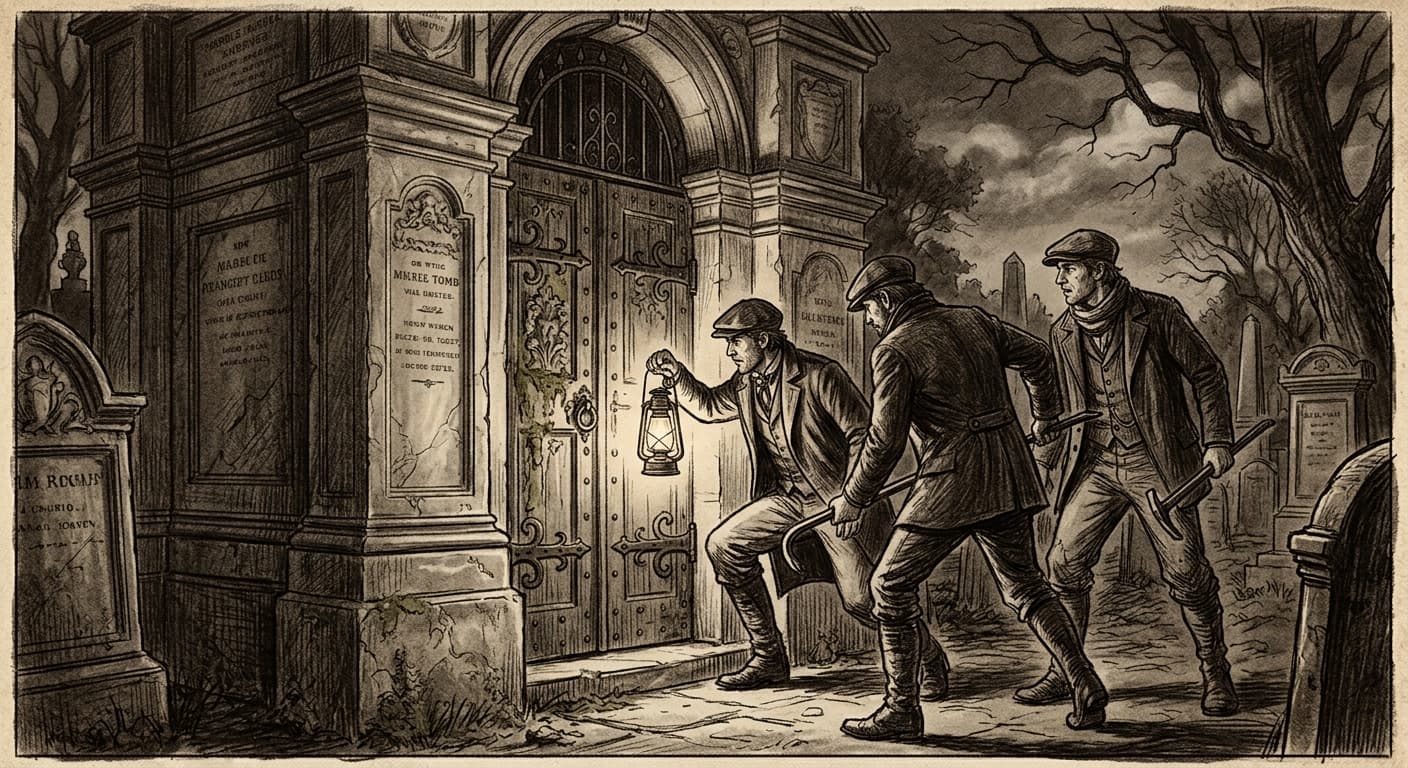
November 7, 1876, was a night of unparalleled tension in the United States. The country was embroiled in the fiercely contested Hayes-Tilden presidential election, and citizens across the nation were glued to the telegraph wires, waiting for the results. But while the nation was distracted by the political theater, a small gang of counterfeiters from Chicago was creeping into Oak Ridge Cemetery in Springfield, Illinois. Their goal was not political sabotage or election interference. Their objective was much darker: they were there to steal the corpse of Abraham Lincoln.
The mastermind behind this macabre plot was "Big Jim" Kennally, the boss of a notorious Midwestern counterfeiting ring. During the post-Civil War era, counterfeiting was a massive and lucrative industry, but it relied heavily on the skill of master engravers. Kennally's best engraver, a man named Benjamin Boyd, had recently been caught and sentenced to ten years in the state penitentiary. Without Boyd's meticulous plates, Kennally's fake currency looked amateurish, and his profits were plummeting. Desperate times called for desperate measures. Kennally decided he needed extreme leverage to force the governor of Illinois to pardon Boyd. He concocted a plan to kidnap the late president's remains, demanding Boyd's release and a staggering ransom of $200,000 in cash.
To pull off the heist of the century, Kennally enlisted two members of his gang: Terence Mullen, a saloonkeeper, and Jack Hughes, a manufacturer of counterfeit nickels. Mullen and Hughes were career criminals, but they were far from criminal masterminds. They quickly realized that stealing a president's body was a logistical nightmare. Lincoln's remains were housed in a massive marble sarcophagus, enclosed in a heavy cedar coffin, which was itself lined with lead. Realizing they lacked the muscular fortitude and grave-robbing experience required, they sought out a professional "ghoul" to help them move the 500-pound casket.
They found their man in Lewis Swegles, a fast-talking criminal who claimed to have extensive experience in body-snatching. What Mullen and Hughes did not know was that Swegles was a paid informant for the United States Secret Service. In an incredible twist of historical irony, the Secret Service had been created by Abraham Lincoln on April 14, 1865—the very day he was assassinated—specifically to combat the rampant counterfeiting plaguing the nation. The agency was fully aware of Kennally's plot from the start, and they set a trap at Oak Ridge Cemetery.
On the night of the heist, Mullen, Hughes, and Swegles broke the padlock on the tomb's iron door and slipped inside. With crowbars and sheer brute force, they managed to pry the heavy marble lid off the sarcophagus and pull Lincoln's lead-lined coffin about eighteen inches out of its resting place. At this crucial moment, Swegles politely excused himself, claiming he needed to go fetch their getaway wagon. Instead, he stepped out into the chilly night air and signaled a team of Pinkerton detectives and Secret Service agents who were lying in wait in the shadows of the cemetery.
What followed was a scene straight out of a slapstick comedy. As the lawmen prepared to storm the tomb, one of the detectives' pistols accidentally discharged. The deafening gunshot echoed through the silent cemetery, throwing the ambush into absolute chaos. The agents rushed into the darkness of the tomb, only to end up wildly firing their weapons at each other in the pitch-black monument. Miraculously, no one was killed in the friendly fire, but the chaotic gunfire provided the perfect distraction. Mullen and Hughes, realizing they had been set up, casually slipped out a side door and escaped into the night, entirely unnoticed by the bumbling detectives.
The grave robbers' freedom was short-lived. They were easily tracked back to Mullen's Chicago saloon and arrested just a few days later. Because stealing a body was only considered a misdemeanor in Illinois at the time, they were merely charged with attempting to steal the coffin—a crime that earned them a measly one-year sentence in the same penitentiary as Benjamin Boyd.
However, the botched heist had a profound and lingering impact on the late president's final rest. The custodian of the monument, John Carroll Power, was so terrified that another gang would attempt a similar plot that he and a secret society known as the Lincoln Guard of Honor took matters into their own hands. They quietly moved Lincoln's coffin into the basement of the monument, hiding it under a pile of scrap wood and debris. For the next several years, thousands of mourners wept and paid their respects before an empty marble sarcophagus, entirely unaware that the Great Emancipator was actually resting under a dirt floor just a few feet away.
It wasn't until 1901 that Lincoln finally achieved true peace. At the strict orders of his sole surviving son, Robert Todd Lincoln, the president's casket was placed inside a steel cage, lowered into a ten-foot-deep vault, and buried under tons of wet concrete.
Ultimately, the 1876 tomb raid stands as one of the most bizarre and ironic footnotes in American history: a gang of counterfeiters thwarted in their attempt to steal a president, defeated by the very law enforcement agency that president had created to stop them.