The Day the World Didn't End: The Heartbreak of the 1844 Great Disappointment
Imagine quitting your job, giving away your life savings, and leaving your crops to rot in the field—all because you are absolutely certain that the world is going to end on a Tuesday.
For tens of thousands of Americans in the mid-19th century, this wasn't a hypothetical scenario. It was the reality of October 22, 1844. This date marked the climax of one of the most fascinating and devastating religious movements in American history: the Millerite movement, which culminated in an event appropriately, if tragically, known as the Great Disappointment.
The story begins with a man named William Miller, a humble farmer and veteran of the War of 1812 from Upstate New York. After surviving the brutal battlefields of the war, Miller underwent a profound spiritual crisis. Seeking answers, he turned to the Bible, specifically the heavily symbolic Book of Daniel. After years of meticulous—if entirely misguided—mathematical calculations based on ancient prophecies, Miller came to a stunning conclusion: Jesus Christ was returning to Earth to cleanse it with fire, and the apocalypse was going to happen sometime between March 1843 and March 1844.
Initially, Miller was hesitant to share his doomsday math. But in the 1830s, he finally began to preach. And in the fevered religious atmosphere of America's Second Great Awakening, his message caught fire. What Miller lacked in charisma, he made up for in earnest conviction and dizzying charts full of dates and historical eras.
However, the movement wouldn't have become a national phenomenon without Joshua V. Himes. A dynamic Boston pastor and the ultimate 19th-century hype man, Himes transformed Miller's local following into a mass media empire. He published Millerite newspapers, printed massive prophetic charts, and organized sprawling tent revivals. Soon, up to 100,000 Americans were calling themselves Millerites, eagerly awaiting the end of days.
When the initial window of March 1844 closed without a fiery apocalypse, the movement experienced a brief crisis. But a follower named Samuel Snow stepped in, claiming to have discovered an error in the math. The real date, Snow enthusiastically proclaimed, was October 22, 1844.
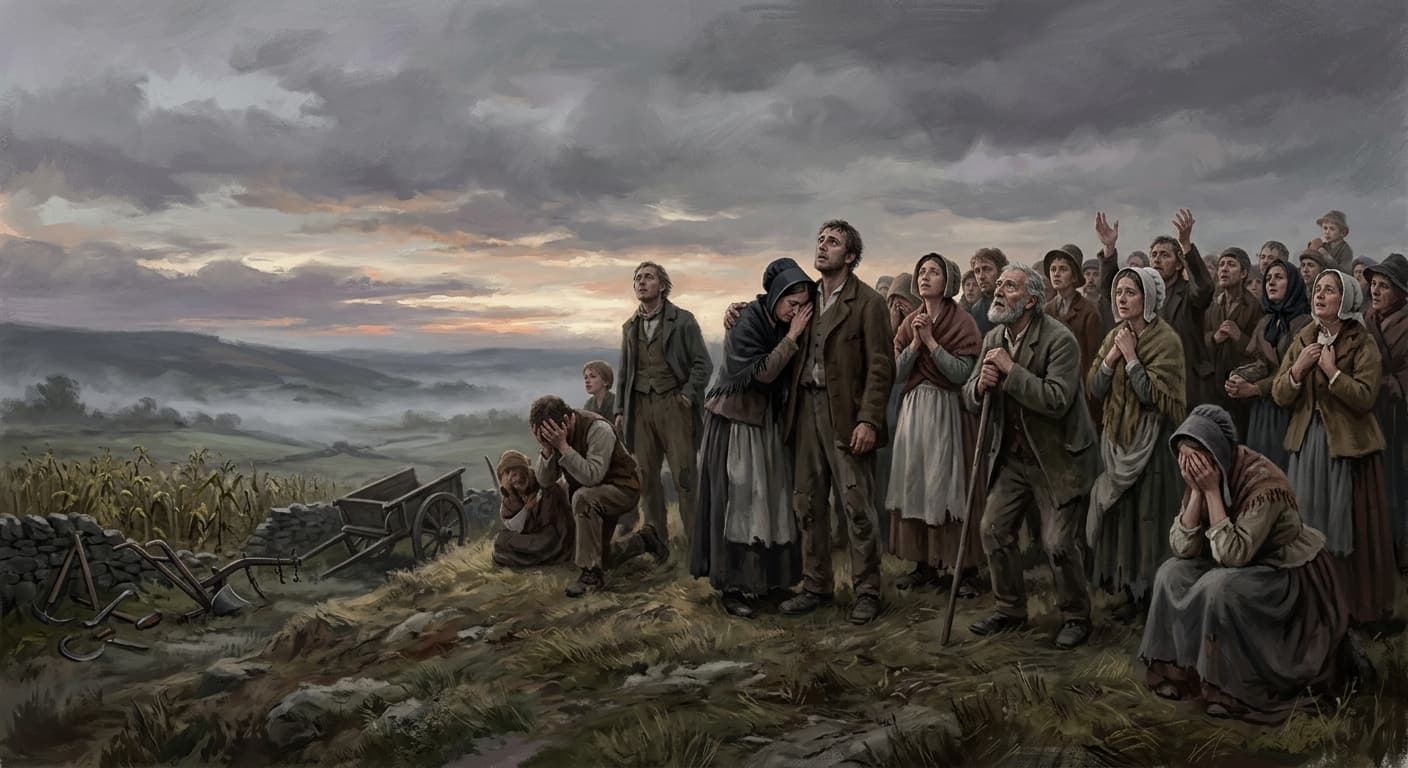
This new deadline ignited what became known as the "Seventh-month movement." As the autumn leaves began to turn, the fervor reached an absolute fever pitch. Millerites across the Northeast prepared for their imminent departure. The stories of their devotion are as staggering as they are heartbreaking. Farmers left their potatoes to rot in the soil. Shopkeepers closed their doors, leaving signs that read "Closed in honor of the King of Kings." Believers settled their debts, confessed their sins, and gave away their earthly possessions, convinced they would have no need for money in the Kingdom of Heaven.
On the evening of October 21, the faithful gathered in meeting houses, in open fields, and on mountaintops. They prayed, they sang, and they waited. The midnight hour passed. Then the dawn broke. The sun rose on October 22, and it set on October 22. The skies remained stubbornly silent.
The morning of October 23 brought a crushing reality. Hiram Edson, a devout Millerite, later wrote of that morning: "Our fondest hopes and expectations were blasted, and such a spirit of weeping came over us as I never experienced before... We wept, and wept, till the day dawn."
The aftermath of the Great Disappointment was chaotic. The Millerites faced widespread mockery from the public and the press. Many believers, now completely destitute after giving away everything they owned, were forced to beg for food from the very neighbors who had laughed at them. The movement immediately splintered. Many abandoned their faith entirely, deeply traumatized by the betrayal of their own convictions.
Yet, from the ashes of this spectacular failure, new movements were born. Several of the surviving Millerite factions went back to their Bibles to figure out where the math had gone wrong. One of these splinter groups eventually reorganized and grew into the Seventh-day Adventist Church, a major global denomination today.
The Great Disappointment remains a poignant chapter of the 19th century. It is a striking testament to the power of belief, the persuasive draw of a charismatic movement, and the profound resilience—and vulnerability—of the human spirit when faced with the silent indifference of the cosmos.