The Raps Heard 'Round the World: The Fox Sisters and the Birth of Modern Spiritualism
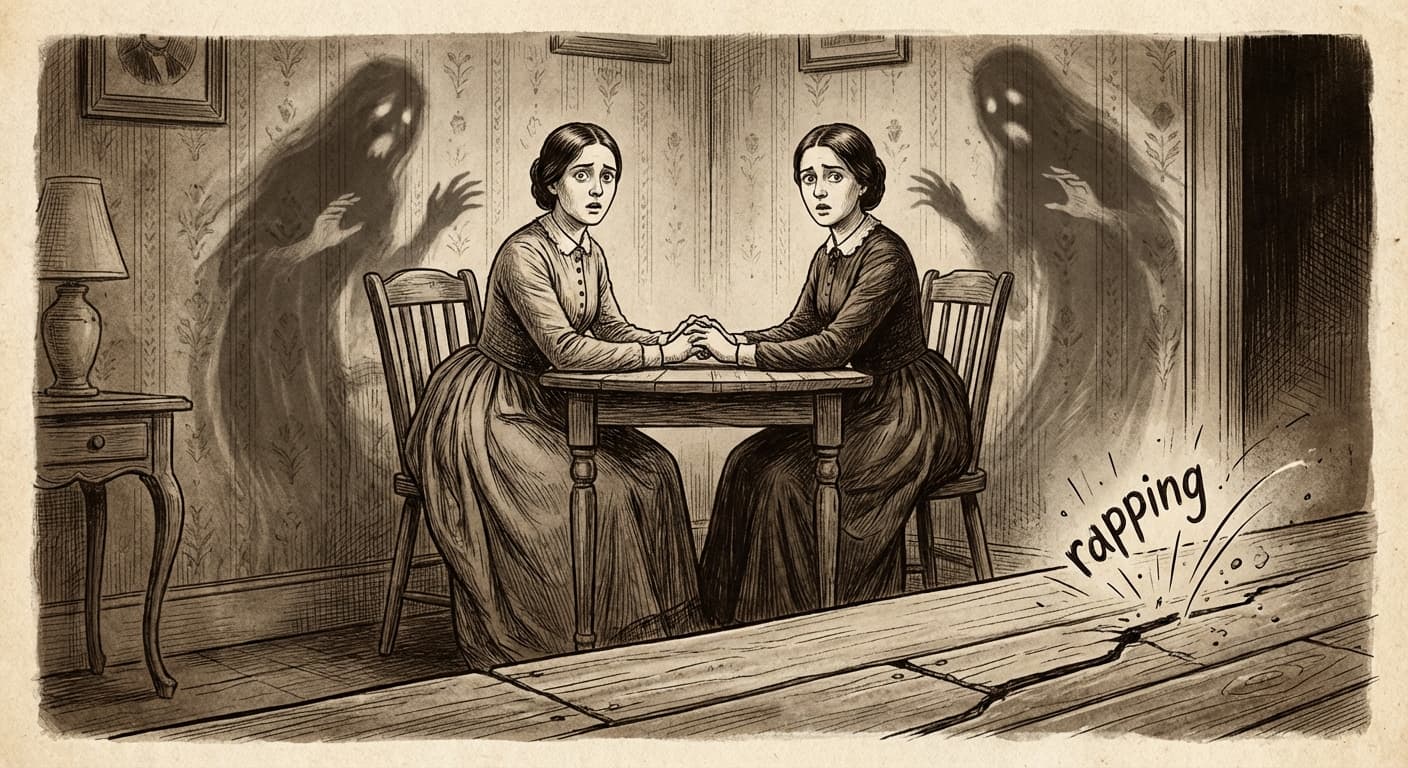
On a chilly night in March 1848, in a nondescript farmhouse in Hydesville, New York, the course of religious history was altered by a sound. It wasn't a thunderclap or a sermon, but a simple, rhythmic rap-rap-rap echoing against the wooden walls. Inside the cottage, two young sisters, barely teenagers, claimed to be communicating with the dead. What started as a frightened family huddled in a bedroom would explode into a global phenomenon known as Spiritualism, captivating millions and confusing scientists for decades. This is the story of Kate and Maggie Fox, the unlikely prophets of the 19th century.
The Haunting of Hydesville
The Fox family—Methodist farmers—had only recently moved into the small house in Wayne County when the noises began. At first, it was just strange knocks that kept them awake. But on the night of March 31, 1848, the youngest daughter, 11-year-old Kate, decided to challenge the invisible noise-maker. "Here, Mr. Splitfoot, do as I do!" she cried out, clapping her hands. To the horror of her mother, the wall rapped back the exact number of times.
Through a system of codes—one rap for no, two for yes, and an alphabet cipher—the sisters claimed to be conversing with the spirit of a murdered peddler buried in the cellar. Neighbors were summoned. Skeptics arrived and left shaken. Digging in the cellar eventually revealed human bone fragments (and years later, a full skeleton was found behind a wall), fueling the fire of belief. The idea that the dead could communicate so directly, so physically, was electrifying.
From Parlor Tricks to Global Religion
The events in Hydesville might have remained a local ghost story if not for the sisters' older sibling, Leah Fox. Sensing an opportunity, Leah took charge of Maggie and Kate, moving them to Rochester and eventually New York City. She marketed their abilities, holding public séances where admission was charged. The timing was perfect. The United States was in the throes of religious revivalism in the "Burned-over District" of New York, and the looming shadow of the Civil War would soon leave a nation grieving for lost sons, desperate for reassurance that death was not the end.
The "Rochester Rappings" became a sensation. Intellectuals, abolitionists, and scientists flocked to witness the sisters. The movement grew to include table-turning, automatic writing, and full-form apparitions. By the 1850s, it was estimated that there were over a million Spiritualists in America. Famous figures like Horace Greeley, editor of the New York Tribune, championed the girls. Even Mary Todd Lincoln held séances in the White House to contact her deceased son, Willie.
The Burden of the Spirits
However, the life of a medium was exhausting and isolating. The pressure to perform was immense. The sisters were subjected to humiliating tests by skeptics who bound their hands and feet, yet the raps continued. Scientists from Harvard and the University of Pennsylvania investigated them, often leaving baffled, though some suspected the sounds originated from the girls' own bodies.
Behind the velvet curtains of the séance rooms, the sisters were unraveling. Thrust into fame as children, they never developed normal lives. As they grew older, both Maggie and Kate struggled with severe alcoholism, fueled by the stress of constant scrutiny and the control of their domineering sister, Leah. The bond between the three sisters fractured, leading to a feud that would bring the entire temple of Spiritualism crashing down.
The Great Recantation
In October 1888, forty years after the first rap in Hydesville, a destitute and vengeful Maggie Fox walked onto the stage at the New York Academy of Music. With Kate looking on from the audience, Maggie delivered a bombshell that shocked the world. It was all a lie.
Before a stunned crowd, Maggie removed her shoe and placed her stockinged foot on a wooden stool. A loud rap echoed through the hall. She explained that she and Kate had discovered as children that they could crack their toe joints loud enough to resonate against the hollow wooden floorboards. "I have seen so much miserable deception," Maggie declared. "That is why I am willing to state that Spiritualism is a fraud of the worst description."
The method was simple yet anatomically unique: by hooking their big toes against the second toe and snapping it, they could produce a sound that was impossible to pinpoint in a room. When skeptics held their hands or feet, the sisters simply pressed their toes against the floor or table legs to produce the sound.
A Legacy Unbroken
The confession should have ended Spiritualism, but belief is a stubborn thing. The movement had grown beyond the Fox sisters; true believers claimed Maggie was merely paid to lie or was under the influence of alcohol (which she often was). Tragically, Maggie recanted her confession a year later, likely for money, but the damage was done. Both sisters died in poverty in the early 1890s, buried in pauper's graves.
Today, the Fox sisters are a tragic footnote in the history of the paranormal. They were two little girls playing a prank that spiraled out of control, accidentally founding a religion that offered comfort to millions. Whether one views them as con artists or victims of their own success, the Fox sisters proved one undeniable fact about the 19th century: the world was desperate to believe there was something more beyond the veil.