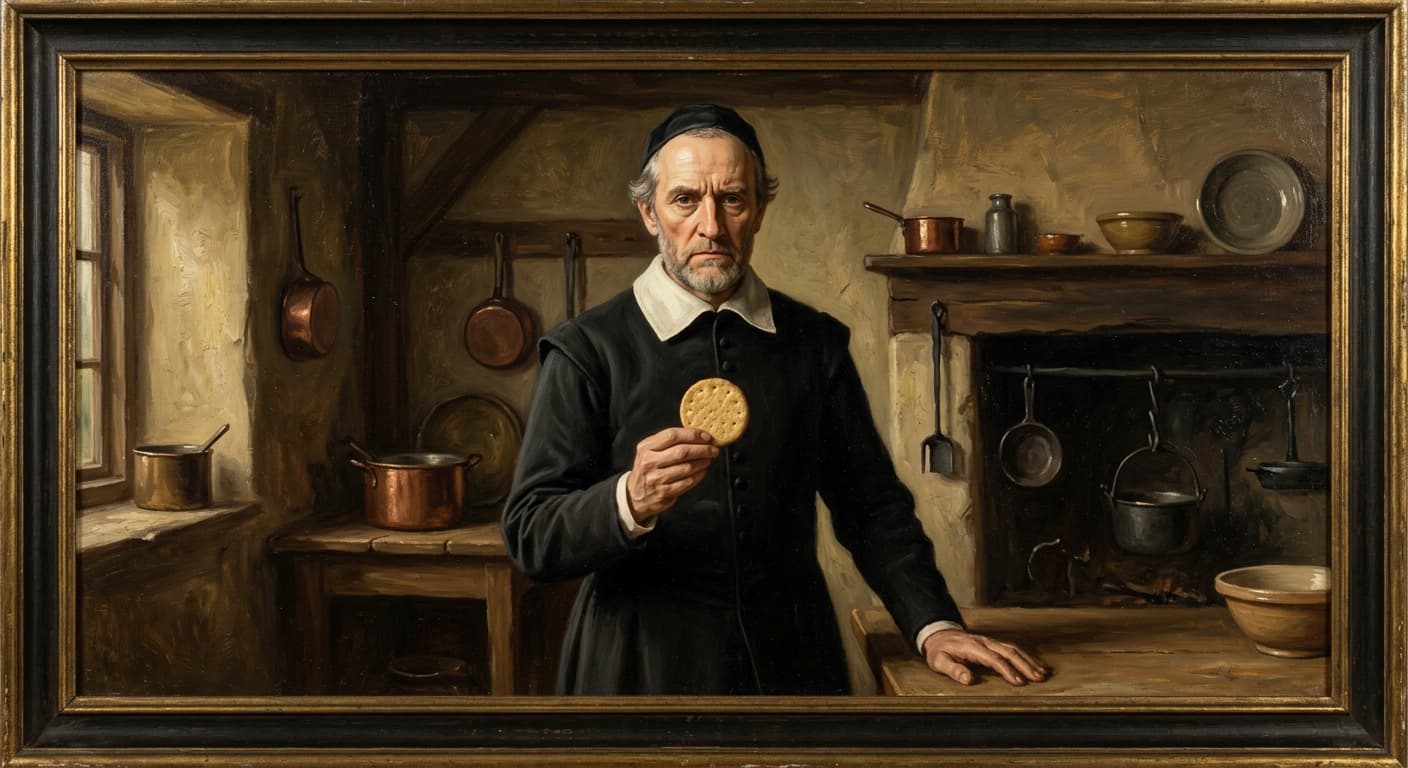
The Crusade Against Pleasure: How Sylvester Graham Invented a Boring Cracker to Save Humanity
Picture the modern graham cracker. It’s the structural integrity of a gingerbread house, the sweet, crunchy exterior of a cheesecake crust, and the critical bookend of the legendary campfire s’more. Today, we associate this honey-kissed biscuit with childhood indulgence and sugary delight. But if the man who invented it were alive to witness what his creation has become, he would likely drop to his knees in sheer, unadulterated horror. In the 1830s, the graham cracker was not designed to be a sweet treat. It was engineered to be a weapon—a bland, joyless weapon forged in the fires of a holy crusade against humanity's greatest perceived enemy: sexual desire.
The man behind the cracker was Sylvester Graham, an eccentric, fiery 19th-century Presbyterian minister born in Connecticut in 1794. In the 1830s, America was undergoing a massive, disorienting shift. Rapid urbanization, the boom of industrialization, and terrifying, poorly understood cholera epidemics had left the public anxious and desperate for answers. Where contemporary doctors saw a perplexing medical mystery, Reverend Graham saw a profound moral failing. He firmly believed that the root cause of all human suffering—from tuberculosis and cholera to indigestion and societal decay—was physical and nervous overstimulation. And the primary culprit of this dangerous overstimulation? The dinner table.
According to Graham's highly publicized teachings, the American diet of the 19th century was a hedonistic nightmare that was destroying the nation from the inside out. He preached that consuming rich, highly seasoned foods, heavy meats, and alcohol excited the nervous system to dangerous levels. This dietary excitement, he argued, inevitably led to overwhelming carnal urges and impure thoughts. In Graham's unique medical philosophy, giving in to these urges depleted the body's vital life force, leaving it vulnerable to chronic disease and early death. To save both the physical body and the immortal soul, Graham developed a strict lifestyle regimen designed to extinguish every spark of physiological excitement.
The resulting "Graham Diet" was a punishing exercise in daily asceticism. Followers of the reverend—who became proudly known as "Grahamites"—were instructed to sleep on hard mattresses, keep their windows open even in the dead of winter, take freezing cold baths, and engage in vigorous daily exercise. But the absolute cornerstone of the movement was the food. Graham strictly forbade meat, dairy, coffee, tea, alcohol, and absolutely all spices. Even mundane seasonings like salt and pepper were deemed far too provocative for human consumption. The approved diet consisted almost entirely of plain vegetables, fruits, and a very specific type of bread.
Graham held a particular, burning disdain for commercially baked white bread, which was becoming increasingly popular and accessible at the time. He believed that separating the bran from the wheat was a sin against nature's perfect design, stripping the grain of its intended health benefits. In response, he championed the use of coarsely ground, unsifted, unbleached whole wheat flour—what we now know as "Graham flour." From this rough, fibrous material, he created Graham bread and the original Graham cracker. It was a dense, dry, and brutally bland biscuit. It was food stripped of all joy, scientifically formulated to keep the human libido in a state of eternal hibernation.
Despite—or perhaps because of—its extreme and punishing nature, Graham's philosophy caught fire across the country. He became one of America's very first celebrity health gurus. Boarding houses dedicated to the Grahamite lifestyle sprang up in major cities like New York and Boston, attracting writers, thinkers, and anxious citizens looking for a cure-all. However, not everyone was a fan of the crusading minister. Graham's fierce denunciation of commercial bakers and butchers made him powerful, angry enemies. In 1837, during a scheduled lecture in Boston, an angry mob of butchers and commercial bakers rioted, attempting to storm the stage and physically assault the Reverend. Loyal Grahamites had to dump slaked lime out the windows to repel the furious crowd of meat-eaters.
Sylvester Graham passed away in 1851 at the relatively young age of 57, after receiving dubious medical treatments that included enemas and hot baths—a bitter and ironic end for a man who had spent his life championing cold water and dietary purity. With his passing, the strict, cult-like adherence to the Grahamite lifestyle slowly dissolved into obscurity. Yet, his namesake flour and his boring little cracker stubbornly lived on. Over the subsequent decades, commercial bakeries realized that Graham's health biscuit could actually be quite a delicious product if they just added a few unholy ingredients.
By the late 19th and early 20th centuries, ingredients like sugar, molasses, honey, and cinnamon were folded into the dough. The cracker transformed from a puritanical tool of repression into a beloved national snack. Today, the modern graham cracker stands as one of history's greatest culinary ironies. The very biscuit created by a zealous minister to suppress pleasure, eradicate lust, and extinguish the passions of mankind is now best known for being sandwiched between a slab of rich milk chocolate and a gooey, fire-roasted marshmallow.