The Criminal Who Invented the Detective: The Wild Life of Eugène François Vidocq
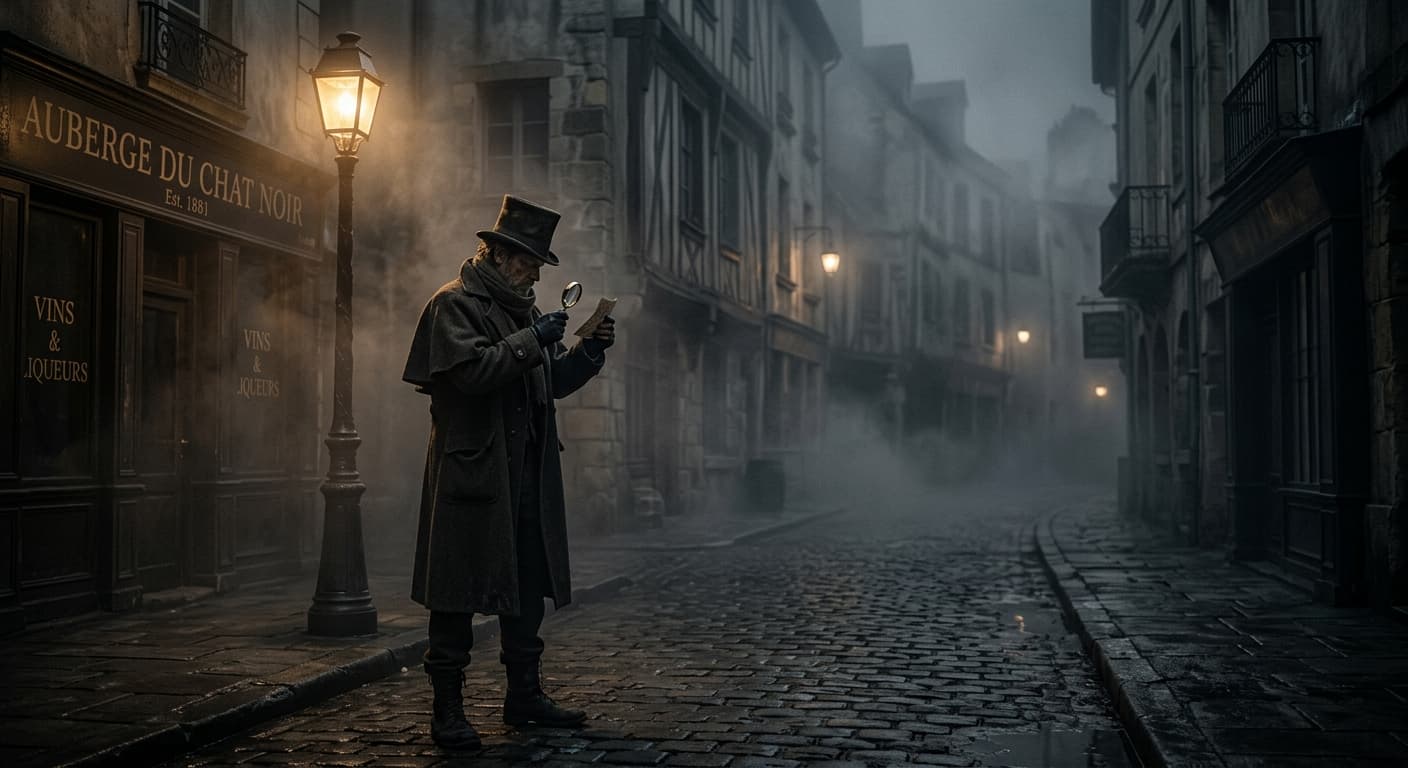
When we think of the brilliant 19th-century detective, our minds immediately conjure up the image of Sherlock Holmes pacing his study in Baker Street, or perhaps Edgar Allan Poe’s C. Auguste Dupin unravelling a locked-room mystery. But long before Arthur Conan Doyle or Poe put pen to paper, the modern detective was already walking the cobbled, foggy streets of Paris. He wasn’t a gentleman of leisure or an armchair philosopher. He was a master of disguise, a notorious escape artist, and at one point, one of the most wanted criminals in the country. His name was Eugène François Vidocq, and his life story is far wilder than any fiction.
A Master of Disguise and Deception
Born in Arras, France, in 1775, Vidocq’s early years were characterized by chaos and rebellion. As a teenager, he stole his parents' silver to run away from home, joined a traveling circus, and eventually enlisted in the French Revolutionary army, where he claimed to have fought in over a dozen duels in his first six months alone.
By his early twenties, Vidocq was deeply entrenched in the French underworld. He was repeatedly thrown into brutal prisons, only to escape using astonishingly creative methods. He once walked out of a heavily guarded facility disguised as a nun, and another time he slipped away wearing the stolen uniform of a prison inspector. His intimate, hard-won knowledge of the criminal underbelly made him an undisputed master of the streets, but it also meant he was constantly looking over his shoulder, living a life of endless paranoia.
The Turning Point
By 1809, Vidocq was exhausted. At 34 years old, he was tired of life on the run and constantly being blackmailed by former cellmates who threatened to expose his identity to the authorities for a quick payout. In a remarkably brazen move, he approached the Paris police with a proposition: if they granted him amnesty, he would turn his formidable skills against the very criminals he used to run with.
Recognizing the immense value of his insider knowledge, the police agreed. Vidocq was initially placed as an undercover informant inside the notorious La Force prison, where he gathered intelligence on gang operations, upcoming heists, and unsolved murders, secretly passing the information to the police chief.
The Creation of the Sûreté
His success as an informant was so unprecedented that in 1812, the police allowed him to form his own plainclothes unit, the Brigade de Sûreté (Security Brigade). Vidocq firmly believed that "it takes a thief to catch a thief," so he exclusively hired former convicts.
This motley crew of reformed rogues revolutionized law enforcement. Unlike the uniformed guards of the era, who were easily spotted and avoided by criminals, Vidocq’s agents blended seamlessly into the Parisian slums. They frequented rough taverns, infiltrated gangs, and used their street smarts to dismantle organized crime networks from the inside. In its first year alone, the Sûreté was responsible for arresting hundreds of thieves, counterfeiters, and murderers. The unit was so successful that it eventually became the French National Police force.
The Birth of Modern Forensics
But Vidocq was far more than just a clever undercover operator; he was a true pioneer of criminal investigation. Decades before modern forensics became standard police practice, Vidocq was aggressively applying science to his work.
He was the first recorded investigator to make plaster casts of shoe prints left at crime scenes. He pioneered the use of a comprehensive card-index system, meticulously recording the physical descriptions, aliases, and modus operandi of known criminals—the direct ancestor of the modern police database. He even hired chemists to develop indelible ink to prevent the altering of official documents, and he frequently conducted early ballistics tests to match bullets to specific firearms.
The World's First Private Eye
Despite his monumental success, Vidocq’s criminal past constantly drew the ire of his elite superiors. The regular police force deeply resented the fact that an ex-convict was consistently outperforming them, and in 1832, political pressure forced him to resign.
However, Vidocq wasn't done catching crooks. In 1833, he opened Le Bureau des Renseignements (The Office of Information), explicitly offering professional investigation services to private citizens and businesses. In doing so, Eugène François Vidocq became the world’s very first private detective. His agency functioned as a combination of a private investigation firm and a credit bureau, helping merchants uncover fraud and tracking down stolen goods for a fee.
A Lasting Literary Legacy
Vidocq’s larger-than-life exploits made him a living legend in 19th-century France. He became close friends with literary giants like Honoré de Balzac, Alexandre Dumas, and Victor Hugo. Hugo was so inspired by Vidocq’s paradoxical life that he split the detective’s personality into two of literature’s greatest characters in Les Misérables: the resilient, reformed criminal Jean Valjean and the relentless, obsessive police inspector Javert.
Across the English Channel, his memoirs directly influenced Edgar Allan Poe's creation of the modern detective genre. Without the audacious, rule-breaking life of this former crook, the world of modern law enforcement—and the beloved mystery genre it inspired—would look entirely different today.