Eighteen Hundred and Froze to Death: The Chilling Tale of the Year Without a Summer
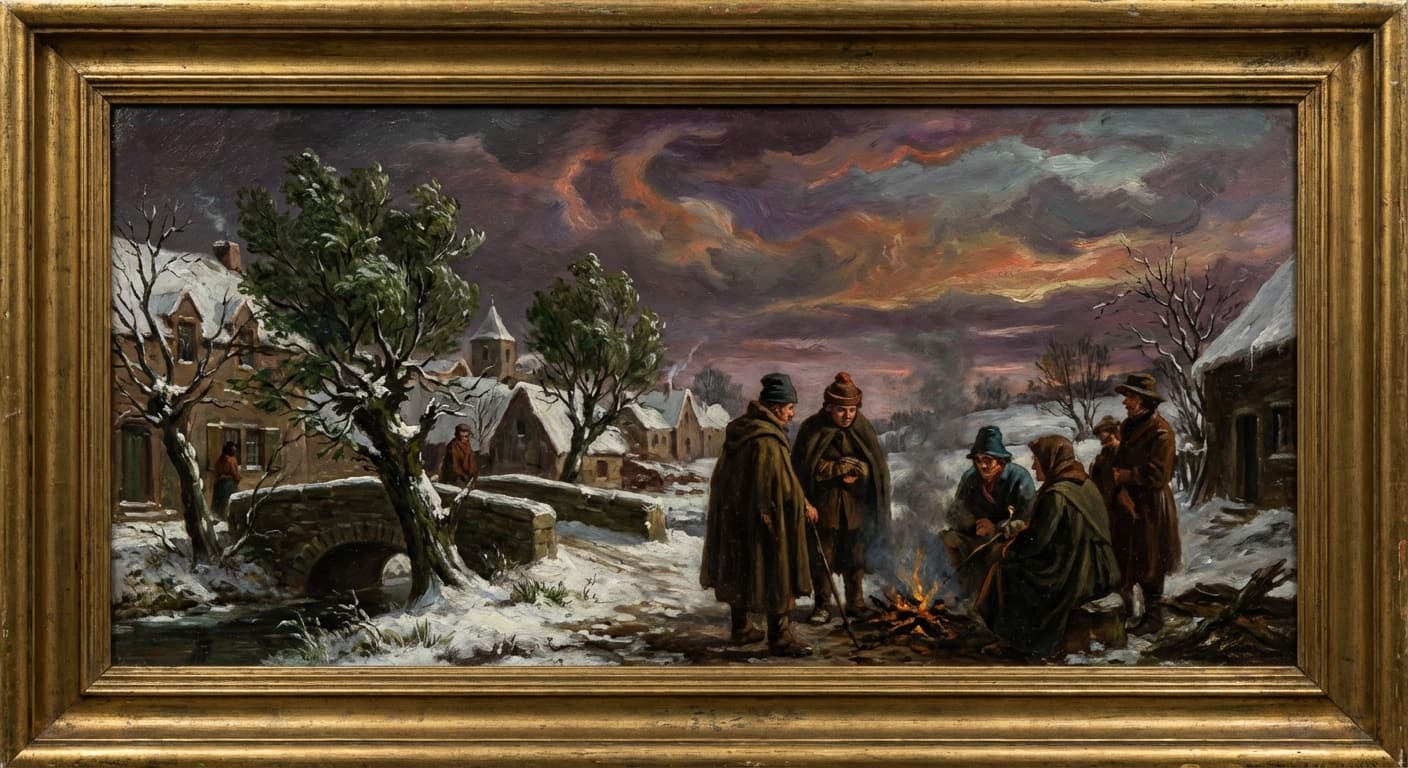
Imagine waking up on a morning in June, expecting the warm caress of early summer sun, only to find frost coating your windowpane and snow drifting against the barn door. For those living in 1816, this dystopian scenario was a cold, hard reality. Known colloquially in New England as "Eighteen Hundred and Froze to Death," 1816 stands out in the history books not for a great war or a political revolution, but for a climatological catastrophe that brought the Northern Hemisphere to its knees. It was the Year Without a Summer, a time when nature went haywire, starving nations and inadvertently birthing some of the greatest monsters in literary history.
The Invisible culprit
To the farmers of Vermont or the peasants of Europe, the weather seemed like a divine punishment. They had no way of knowing that the architect of their misery lay thousands of miles away in the Dutch East Indies (modern-day Indonesia). In April 1815, Mount Tambora erupted with apocalyptic force. It remains the most powerful volcanic eruption in recorded human history, rated a 7 on the Volcanic Explosivity Index.
Tambora ejected roughly 36 cubic miles of ash, pumice, and aerosol droplets into the atmosphere. This massive plume didn't just settle; it pierced the stratosphere, spreading a veil of sulfate aerosols around the globe. This veil acted like a giant mirror, reflecting incoming sunlight back into space and cooling the Earth's surface significantly. While the immediate effects were felt in Asia, the atmospheric hangover hit Europe and North America a year later, turning 1816 into a climatic anomaly.
A Summer of Starvation
The consequences were immediate and devastating. In the United States, particularly in New England and upstate New York, temperatures swung violently. Farmers who planted crops in May watched them freeze in June. On June 6th, snow fell in Albany, New York, and Maine. July and August saw repeated killing frosts that blackened cornstalks in the fields.
Across the Atlantic, Europe was still licking its wounds from the Napoleonic Wars. The erratic weather—incessant cold rain and lack of sunlight—caused catastrophic crop failures. Wheat, oats, and potatoes rotted in the sodden ground. The price of grain skyrocketed, leading to bread riots in France and Switzerland. In Ireland, the famine conditions facilitated a typhus epidemic that claimed thousands of lives. It was the last great subsistence crisis in the Western world, a grim reminder of how fragile the line between civilization and starvation really was.
The Birth of Monsters
Yet, amid the gloom and hunger, the Year Without a Summer produced an unexpected cultural legacy. That summer, a group of young, artistic expatriates rented a villa near Lake Geneva in Switzerland. The party included the poet Percy Bysshe Shelley, his future wife Mary Godwin (later Shelley), Lord Byron, and Byron's physician John Polidori.
Trapped indoors by the relentless, gloomy rain and unseasonable cold, the group amused themselves by reading German ghost stories. Eventually, Byron proposed a challenge: they would each write their own tale of the supernatural. The oppressive atmosphere of that "wet, ungenial summer" seeped into their imaginations. Mary Shelley, inspired by a waking dream during those dark days, began to draft the story of a scientist who reanimates a corpse—Frankenstein; or, The Modern Prometheus.
Meanwhile, Byron wrote a fragment that Polidori later expanded into The Vampyre, the first modern vampire story in English literature, pre-dating Bram Stoker’s Dracula by decades. Thus, the volcanic ash of Tambora didn't just kill crops; it fertilized the roots of modern horror and science fiction.
The Sunset's Legacy
The atmospheric dust even changed the way the world looked. The high-altitude aerosols scattered sunlight in unusual ways, creating spectacular, vibrant sunsets featuring brilliant hues of orange, red, and purple. These phenomena were captured by the British painter J.M.W. Turner, whose later landscapes are famous for their luminous, almost violent use of color—a direct observation of the volcanic skies.
Today, 1816 serves as a potent case study for climate scientists and historians alike. It demonstrates how a single geological event can ripple through agriculture, economics, and culture on a global scale. While we often think of the 19th century in terms of industrial progress and empire-building, the Year Without a Summer reminds us that we are always at the mercy of the planet we call home.